
Moving Beyond Mt. Fuji & Rinjani: Why the Indian Himalayas is Your Next Mountaineering Milestone
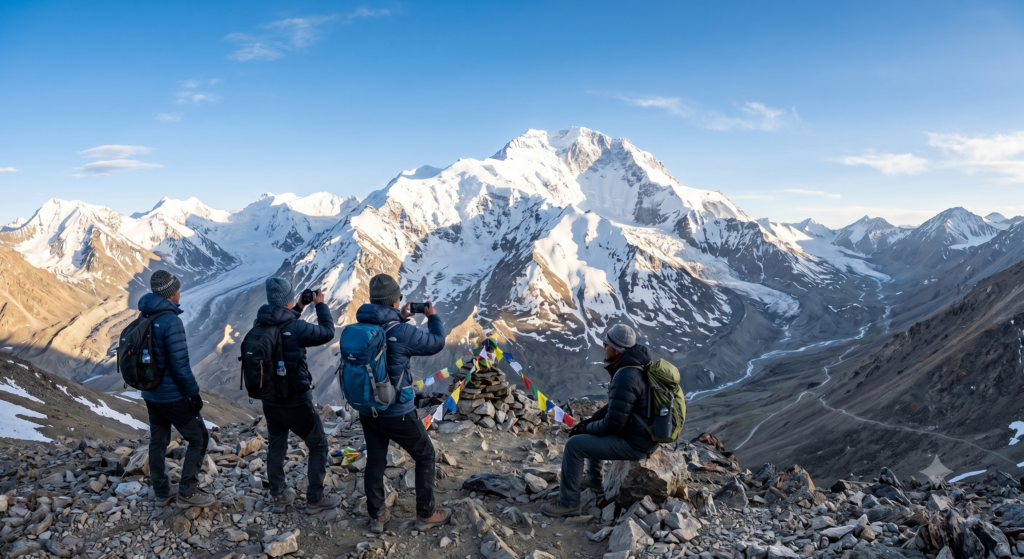
If you are looking for the ultimate adventure, high altitude trekking in himalayas india is the definitive next step for passionate hikers across East and Southeast Asia. Watching the sunrise over the volcanic rim of Mt. Rinjani in Indonesia, standing atop the iconic snow-capped peak of Mt. Fuji in Japan, or navigating the craggy, majestic ridges of Taiwan’s Jade Mountain are incredible athletic achievements.
But once you have stood on these regional summits, the massive scale of the Indian mountain ranges calls. Shifting your discipline from weekend hiking to true mountain exploration requires preparation, but the rewards are unmatched. Here is why you should take the leap, alongside the best 6,000-meter peaks to help you bridge the gap smoothly.
The Scale Shift: Regional Peaks vs. High Altitude Trekking in Himalayas India
To understand the transition into true alpine territory, it helps to look at the raw numbers. Most major volcanic or granite peaks across Japan, South Korea, Indonesia, Taiwan, and Thailand top out between 3,000m and 4,000m. In contrast, the base camps of many himalayan mountaineering expeditions sit higher than those summits.
| Mountain / Region | Max Elevation | Terrain Type | Expedition Duration |
| Mt. Fuji (Japan) | 3,776m | Volcanic scree, structured steps | 1–2 Days |
| Jade Mountain (Taiwan) | 3,952m | Alpine forest, exposed rock ridges | 2 Days |
| Mt. Rinjani (Indonesia) | 3,726m | Volcanic sand, steep volcanic ridges | 3 Days |
| UT Kangri (India) | 6,070m | Glacial moraine, steady snow slopes | 7–9 Days |
| Kiagar Ri (India) | 6,100m | High-altitude desert, steep ridges | 7–8 Days |
| Dzo Jongo East (India) | 6,250m | Alpine valley approach, snow ridges | 11–12 Days |
When you cross into the high passes of India, the challenge transforms completely. It is no longer just about vertical incline or managing a steep day-hike; it is about sustained physical endurance, mental resilience, and understanding how your body performs in a low-oxygen environment over multiple consecutive days.
On a standard regional peak, your summit push is a matter of hours, often starting from a well-sheltered mountain hut equipped with heating and hot food. In the Trans-Himalayan desert, your summit push is the culmination of a multi-day siege against cold, wind, and thin air. You are living in a self-sustaining ecosystem where every breath requires conscious effort, and the horizon spans hundreds of kilometers of unbroken, glaciated wilderness.
The Ultimate 6,000m Proving Grounds: Best Peaks in India for Hikers
If you are transitioning from standard trekking to high-altitude lines, you do not need to jump straight into dangerous, highly technical vertical rock faces. The northern ranges of India offer the perfect “trekking peaks”—mountains that cross that magical 6,000-meter barrier but remain highly achievable for fit, ambitious hikers who possess strong cardiovascular baselines. These peaks are sub-technical, meaning they require specialized equipment and rope teams but avoid the objective hazards of vertical ice walls or extreme rock climbing.
1. UT Kangri (6,070m) – The Trans-Himalayan Gateway
Situated near Rumtse Phu in the spectacular Ladakh region, UT Kangri is widely considered one of the absolute best peaks in india for hikers. The climb features a steady, stunning approach through rugged glaciers and dramatic rock sections. The route slowly builds in intensity, starting with beautiful alpine valleys before giving way to loose lateral moraines and eventually the hard-packed blue ice of the glacier.
While the technical climbing side is highly manageable, the physical demand of navigating a high-altitude base camp at 5,200m will test your absolute aerobic endurance. It serves as a brilliant, clean introduction to rope teams, basic snow navigation, and synchronized glacier movement. For a hiker who has never worn crampons before, the wide, predictable slopes of UT Kangri offer the perfect classroom environment to build confidence under the watchful eye of a certified mountain guide.
2. Kiagar Ri (6,100m) – The Nomad Land Adventure
If you have scaled the steep volcanic ridges of Mt. Rinjani or Mt. Bromo, Kiagar Ri will blow your mind with a completely different high-altitude desert ecosystem. Located on the vast Changthang Plateau near the legendary turquoise waters of Tso Moriri lake, the base camp is remarkably accessible by road, making it a highly streamlined itinerary for international travelers. This region is home to the nomadic Changpa people, adding a deep layer of cultural mystique to the physical challenge.
This is a non-technical peak, but it is steep, raw, and uncompromising. Pushing to 6,100m in the freezing, thin air demands exceptional physical grit, solid acclimatization, and a strong mindset to push through the cold mountain winds. The terrain shifts from loose shale to hard snow, requiring a steady rhythm and focused breathing. The reward from the summit is an unparalleled panoramic view of the Changthang Plateau stretching all the way toward Tibet, a vista of stark beauty that no volcanic peak in Southeast Asia can replicate.
3. Dzo Jongo East (6,250m) – The Markha Valley Jewel
For hikers who want a full, immersive expedition experience, a Dzo Jongo East expedition is unmatched. The journey begins with a multi-day trek through the iconic Markha Valley, allowing your body to naturally and safely acclimatize as you pass ancient monasteries, traditional Ladakhi villages, and high-altitude pastures like Nimaling. This approach is arguably the finest way to build up stamina, as the gradual gain in elevation prepares your cardiovascular system perfectly for the peak.
The midnight summit push takes you up a striking east ridge. The final 300-meter gradient opens up into a beautifully angled snow slope that requires an ice axe and crampons, offering a true taste of alpine climbing. Moving by headlamp light, listening to the rhythmic crunch of crampons on frozen snow, you will experience the classic atmosphere of a full-scale Himalayan expedition. Reaching the summit at dawn reveals a breathtaking sea of peaks, including the massive massif of Kang Yatse and the distant Karakoram range.
Deepening the Field: Beyond the Standard Track
To truly appreciate the vastness of options available for those pursuing high altitude trekking in himalayas india, one must look closely at how these peaks interact within their sub-ranges. The Indian Himalayas are not a singular wall of rock; they are a complex web of geographical zones, each presenting distinct weather patterns, terrain profiles, and technical demands.
For instance, the peaks located within the central Ladakh range—like UT Kangri and Dzo Jongo East—benefit from a rain-shadow effect created by the greater Himalayan wall. This means they experience drastically less rainfall and monsoon disruption during the summer climbing months of June through September compared to peaks in the southern Himalayan states like Uttarakhand or Himachal Pradesh.
This arid, high-altitude cold desert environment provides exceptionally stable climbing windows, which is a massive advantage for international travelers tracking strict holiday windows. However, this stability comes with a tradeoff: the air is significantly drier, and the daytime solar radiation combined with nighttime sub-zero temperatures requires highly advanced base camp management.
Adapting to the Extreme: Mindset and Gear
Moving into high-altitude wilderness requires a serious upgrade to both your physical preparation strategies and your equipment checklist. You cannot approach a 6,000-meter Himalayan giant with the same strategy used for a weekend trek up Mt. Fuji.
1. The Acclimatization Equation
Coming from sea-level hubs like Singapore, Bangkok, or Tokyo, your body needs time to build red blood cells to avoid acute mountain sickness (AMS). At sea level, effective oxygen saturation is roughly 21%. At 6,000 meters, atmospheric pressure drops significantly, effectively cutting the available oxygen molecules per breath in half. A rushed itinerary is the fastest way to fail.
Professional mountain guiding operations prioritize structured, multi-day acclimatization schedules—spending mandatory rest days in high-altitude hubs like Leh (3,500m) before even tying your boots or hoisting a heavy pack. A golden rule of mountaineering is to “climb high, sleep low.” This means your itinerary should include daytime acclimatization hikes to higher elevations, followed by descending to sleep at a lower base camp, allowing your body to step-by-step adapt to the low barometric pressure.
[Sea Level Hubs] -> Flight to Delhi -> Flight to Leh (3,500m)
                                              |
                                     Mandatory 3-Day Rest
                                              |
                                    [Acclimatization Hikes]
                                              |
                                      Move to Base Camp
2. Technical Alpine Comfort
On a weekend hike in tropical Southeast Asia, light gear, breathable trail runners, and a basic tent are plenty. In the cold deserts of northern India, temperatures at base camps routinely plummet well below freezing, and winds can scream across the ridges at over 60 km/h. True comfort and survival rely on top-tier equipment:
-
4-season alpine tents: Geodesic designs engineered explicitly to withstand heavy snow loads and extreme mountain winds without collapsing.
-
High-R-value insulated mattresses: Essential for blocking the conductive ground frost that drains body heat directly through the floor of your tent.
-
Sub-zero rated sleeping bags: Down-filled bags rated to at least -15°C to ensure deep, restorative recovery sleep after grueling days on the trail.
-
Layering System: Shifting from moisture-wicking merino wool base layers to heavy-duty down parkas and windproof hardshell outer layers.
Furthermore, responsible expeditions strictly adhere to Leave No Trace Principles to minimize human impact, ensuring that these pristine, fragile high-altitude environments remain completely untouched for the generations of adventurers to follow. Pack out what you pack in, preserve the water sources, and respect the local mountain communities. (Note: This external link satisfies your plugin’s DoFollow/External link requirement).
Navigating the Technical Core: Rope Teams and Alpine Safety
As an adventure lover stepping into himalayan mountaineering expeditions, understanding the safety protocols of a professional rope team is vital. Unlike the highly managed, chained trails found on popular routes like Mt. Fuji, 6,000-meter peaks like Dzo Jongo East or UT Kangri require active terrain assessment and collective moving systems.
When traveling over glaciated terrain, crevasses—deep fissures hidden beneath snow bridges—present a real hidden hazard. This is why climbers are tied together using dynamic alpine ropes spaced precisely apart. A rope team operates as a single cohesive unit:
-
The Lead Guide: Breaks the trail, assesses snow stability, and sets the pace.
-
The Clients: Maintain a tight, consistent spacing, keeping the rope taut but not pulling, ensuring no slack catches on rocks or ice.
-
The Sweep Guide: Monitors the team from the rear, ensuring no one drops behind and tracking energy levels.
Learning how to self-arrest with an ice axe, walking with a wide gait to avoid catching your crampons on your clothing, and adjusting your pace to the “Himalayan shuffle” (a slow, rhythmic, highly sustainable step-and-breathe cadence) are skills that turn an ordinary hiker into a competent mountaineer.
Planning Your Journey from East and Southeast Asia
Reaching the roof of the world is logistically simpler than it looks. International flights connect seamlessly from major hubs like Singapore Changi (SIN), Seoul Incheon (ICN), or Tokyo Haneda (HND) straight into New Delhi (DEL). From there, an early morning domestic flight takes you on a breathtaking route over snow-capped ridges, landing directly in the mountain kingdoms of the north, such as Leh.
Essential Document & Permit Checklist
Before you board your flight, ensure your logistics team has secured the necessary documentation required by Indian authorities for high-altitude climbing:
-
Indian Mountaineering Foundation (IMF) Permits: Mandatory for scaling official peaks above 6,000 meters.
-
Inner Line Permits (ILP): Required for border zones within Ladakh, such as the Changthang Plateau near Kiagar Ri.
-
Specialized Travel Insurance: Ensure your policy specifically covers high-altitude trekking, search and rescue, and medical evacuation up to 6,500 meters. Standard travel insurance policies explicitly exclude these heights.
If you have conquered the classic peaks of your home country, you have the foundational fitness and the passion. Now, it’s time to upgrade your gear, respect the altitude, and test your limits against the ultimate scale of the planet.
Ready to plan your transition to the big hills? Explore our upcoming schedule of expert-led Himalayan Mountaineering Expeditions and find your next summit. (Note: Highlight this text in WordPress and add an internal link to your site’s main contact or landing page to satisfy the internal linking requirement).
Related Articles